
The Impact Of The Situation In The Middle East On Global Industry
- Details
- Written by: Editor
- Category: Aluminum Market
- Hits: 1065
The recent situation in the Middle East has continued to be tense, especially the blockage of shipping in the Strait of Hormuz, which has had a broad and significant impact on the global manufacturing industry. Global energy and industrial raw material transportation is choked, causing soaring energy prices, disruptions in the supply of critical raw materials, and global logistics disruptions, which in turn drive up manufacturing costs and threaten production in multiple industries, from automotive to semiconductors.
The "industrial skeleton" is choked
Aluminum is an important metal in the global industrial "basket" and one of the most affected non-oil commodities in the Middle East war. The Middle East is an important supplier of aluminum, accounting for about 8% to 9% of the world's total production. Aluminum supply disruptions could lead to tighter supply chains in advanced manufacturing, driving up production costs in automotive, aerospace, and construction manufacturing.
Since the end of last month, aluminium prices on the London Metal Exchange have risen more than 9%, reaching their highest level since 2022.
Thomas Strobel, a strategist at Italy's UniCredit Bank, said that since smelters usually only stock up on three to four weeks of alumina inventory, prolonged shipping disruptions will force factories to cut production, leading to tight supply in the global market.
Bahrain Aluminium operates the world's largest monocole aluminum smelter. Due to the almost complete disruption of shipping in the Strait of Hormuz, the company began to phase out production and began to close three production lines, which together account for 19% of its total annual production capacity of 1.6 million tons.
Bahrain Aluminum's production cuts are the latest example of the impact of the situation in the Middle East on global supply chains. Citibank analysts raised their three-month aluminum price forecast to $3,600 per ton from the previous $3,400 and predicted that aluminum prices could climb to $4,000 per ton if the supply situation deteriorates.
Industry insiders pointed out that even if shipping in the Strait of Hormuz resumes, aluminum circulation may take longer to return to normal. Because aluminum is often transported in containers rather than tankers, it takes a long time to rebalance and adjust the container network.
Chipmakers face the risk of "gas outage"
The situation in the Middle East has exposed another weakness in the global high-end manufacturing supply chain: major chipmakers are at risk of helium shortages.
Helium is a by-product of natural gas processing and is indispensable in the cooling of chip manufacturing. Qatar accounts for about one-third of the world's helium production. However, Qatar Energy previously announced that it had stopped producing liquefied natural gas, aluminum and some chemicals due to the attack on key facilities.
Anish Kapadia, CEO of market research firm Acap Energy, said that helium spot prices have doubled since the situation in Iran escalated. Unlike oil or gas, helium is difficult to store and has very limited reserves. The pressure on the helium market will not ease in the coming months due to damage to Qatar's gas production facilities.
Kim Young-bae, a member of South Korea's ruling Democratic Party of Korea, recently warned that the situation in the Middle East could disrupt the supply of helium and other raw materials from companies such as SK hynix and Samsung Electronics, whose storage components are extremely important to artificial intelligence chip manufacturers. According to data from the General Administration of Customs of South Korea, about 65% of South Korea's helium was imported from Qatar last year.
Semiconductor component costs have continued to rise over the past year, and new supply chain risks will exacerbate this pressure. According to an article published on the website of the American "Politico", semiconductor manufacturing interruptions or soaring prices may impact the global market, affecting computers, smartphones, automobiles, medical equipment and other fields.
The "blood supply" of the manufacturing industry is threatened
The disruption of shipping in the Strait of Hormuz has also affected the production and transportation of a variety of petrochemicals, with soaring sulfur and naphtha prices, highlighting that the situation in the Middle East has spilled over to the broader supply chain.
Sulfur is essential for industries such as fertilizers, computer chips, metalworking, and more. The Gulf region accounts for about 45% of the world's sulfur exports, and the recent surge in sulfur prices has exposed the fragility of the supply chain built around the Gulf region, according to CRU Group, a metals and mining intelligence company.
Clive Murray, CEO of London Commodity Brokerage Ltd., said that while some refineries outside the Middle East have sulfur for sale, the problem is that ships cannot be found to transport sulfur because ship operators are unsure whether they can obtain transportation fuel.
American mining tycoon Robert Friedland posted on social platforms that sulfur supply disruptions will affect copper production in Africa, and the cost of leaching copper oxide ore from the central African copper belt will become more expensive.
The delay in the war in the Middle East has led to a tightening of the supply of naphtha, a key raw material for plastics, and many petrochemical companies in Japan have reduced production, and South Korea has announced that it will restrict naphtha exports. The supply of polyethylene, a downstream product of naphtha, known as the "skin" of modern manufacturing, is also at stake.
Usha Haley, a professor at Wichita State University in the United States, said that the shortage of polyethylene will push up the price of consumer goods. "We are about to enter a period of increased inflation and shrinking manufacturing."
Sourcing Aluminum Profile Supplier At The Canton Fair
- Details
- Written by: Editor
- Category: Aluminum Market
- Hits: 1013
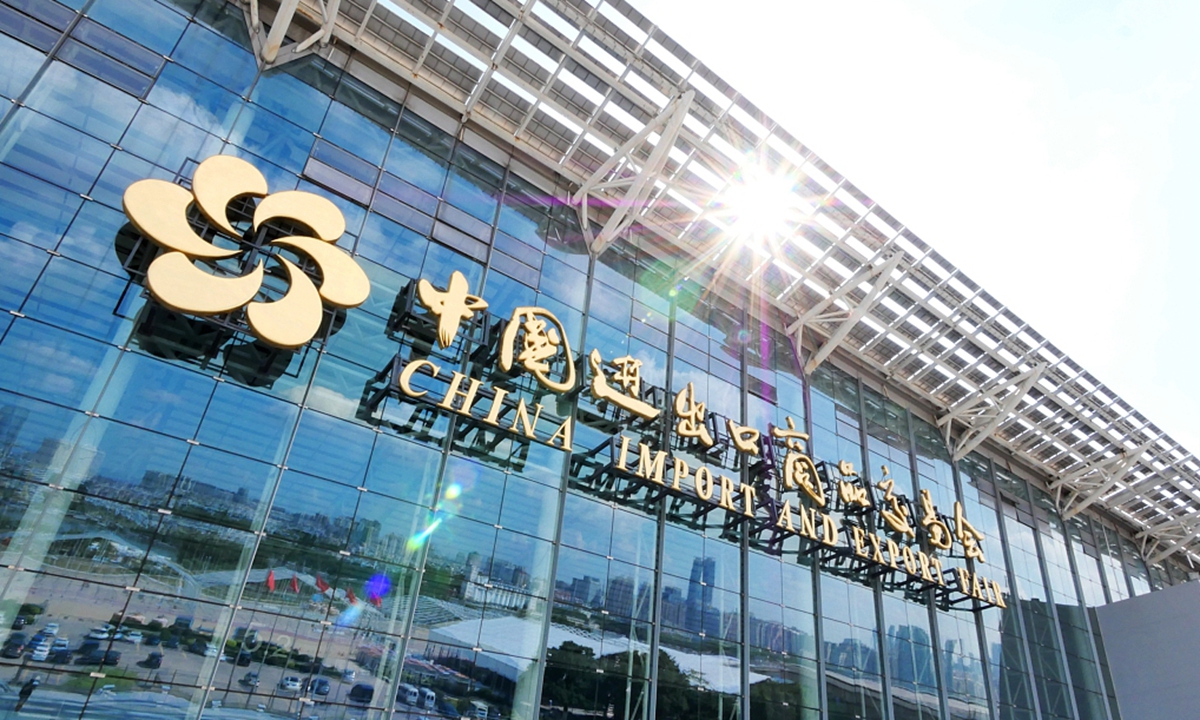
To find suitable aluminum profile suppliers at the Canton Fair, buyers can follow these steps:
**Market and Product Research:** Gain in-depth understanding of the required aluminum profiles and their market to identify potential suppliers.
**Purchase Planning:** Develop a clear procurement plan based on market demand and company strategy to improve efficiency.
**Canton Fair Information:** Familiarize yourself with the exhibition area layout, exhibitor directory, visiting hours, and the thematic seminars and forums held during the fair.
**Visit Route:** Plan a suitable visit route based on your needs to fully understand the products and suppliers at each booth within a limited time.
**Communicate with Suppliers:** Ask specific questions to understand key information such as the supplier's production capacity, product quality, and price, while also assessing the supplier's integrity and service awareness.
Through these steps, buyers can more efficiently find ideal aluminum profile suppliers at the Canton Fair, driving their company's business development.
Top Tips
- Target the Right Phase & Area: Aluminum profiles and building materials are generally featured in Phase 2 (April 23-27 / October 23-27). Look for booths in Area B, which features large-scale manufacturers.
- Locate Key Manufacturing Hubs: Focus on suppliers from Guangdong (Foshan), known for architectural and custom extrusions, Jiangsu, or Shandong, which specialises in large-scale industrial profiles.
- Verify Factory Status: Differentiate between trading companies and direct manufacturers like Xingfa Aluminum, Shenghai Aluminum, or Weiye Aluminum, who offer better quality control and pricing.
- Assess Capabilities: Inquire about alloy options (6000 series, 3000, 5000, 7000) and in-house finishing options (anodizing, powder coating, CNC machining).
- Request Technical Documentation: Ask for SGS reports,ISO certifications, and specific data on precision tolerances, particularly for industrial, electronic, or architectural profiles.
for more information about cantonfair, you can visit this page Canton Fair Official Website and this page Guide to 139th Canton Fair
Primary Producers of Aluminum Profiles
- Details
- Written by: Editor
- Category: Aluminum Market
- Hits: 1105

China is the primary producer of aluminum profiles, holding a large share of the global market due to its complete industrial chain. Other major producers and stockpiles include Russia, India, Canada, the United Arab Emirates, the United States, Australia, and Brazil. China's main production bases are located in Guangdong, Zhejiang, Jiangsu, and Shandong provinces.
Major Production Locations:
- China: The world's largest producer and consumer of aluminum profiles, dominating the market due to its large scale, low costs, and complete industrial chain.
- Russia, India, Canada, and the UAE: These countries possess abundant energy and mineral resources and are major global producers of primary aluminum and aluminum alloys.
- The United States and European countries: Primarily production bases for high-tech, high-precision industrial aluminum profiles.
- Australia and Brazil: Extremely rich in aluminum ore resources, providing key raw materials for the global aluminum industry.
The global aluminum industry is shifting to regions with lower production costs and ample raw material supply, while China is actively developing high-performance, high-strength high-end aluminum profiles.
Aluminum Market Outlook and Forecast (Q2 – Q3 2026)
- Details
- Written by: Editor
- Category: Aluminum Market
- Hits: 1393

Aluminum Market Outlook: Surging Toward New Highs
The global aluminum market has entered a period of intense volatility in early 2026. After a relatively stable 2025, prices on the London Metal Exchange (LME) skyrocketed in March 2026, hitting a near four-year high of $3,375 per tonne. This represents a significant double-digit gain within just a few weeks, signaling a structural shift in the metal’s pricing logic.
Core Drivers of the Recent Price Spike
The primary catalyst for this recent surge is geopolitical instability in the Middle East. Following conflict escalations in the Gulf region, Aluminium Bahrain (Alba) declared force majeure, and disruptions to the Strait of Hormuz have severely hindered the normal delivery of ingots from a region responsible for nearly 10% of global supply.
Secondary factors include:
Supply Inelasticity: China has reached its 45 million tonne annual capacity cap, leaving little room for domestic production growth to offset global shortages.
Energy Constraints: Rising electricity costs and power instability remain "gatekeepers" for smelter operations, particularly as the industry transitions toward greener production.
Demand Recovery: Sustained demand from the electric vehicle (EV) and renewable energy sectors continues to outpace available supply.
Six-Month Forecast (Q2 – Q3 2026)
The outlook for the next six months remains bullish but volatile. Financial institutions like Citi have raised their short-term targets to $3,600 per tonne, with potential bull-case scenarios reaching $4,000 if supply disruptions persist.
Short Term (3 Months): Prices are expected to stay elevated near the $3,300–$3,500 range as "risk-averse" capital flows into commodities.
Medium Term (6 Months): A slight correction may occur toward late Q3 as new capacity from Indonesia gradually ramps up, potentially stabilizing prices around $2,900–$3,100 per tonne.